


When you come in for regular dental visits, you’re doing something powerful for your long-term health. Your smile is important, and so is everything connected to it. That includes keeping an eye out for early signs of oral cancer, which can show up as small changes inside of your mouth that are easy to overlook.
Oral cancer (sometimes called mouth cancer or oral cavity cancer) can affect the lips, tongue, cheeks, and other parts of the oral cavity. Like many types of cancer, it is typically easier to manage when it’s caught early. That is why early detection and a routine oral cancer screening during dental checkups matter for patients and families in Reynoldsburg and the surrounding Columbus communities.
What are the early signs of oral cancer?
The early signs of oral cancer often look like common mouth problems at first. You might notice a spot that does not go away, a sore that keeps coming back, or a patch that looks different than the surrounding tissue. These warning signs deserve attention, especially if they last longer than two weeks or keep returning in the same area.
Because the symptoms of oral cancer can be subtle in an early stage, an oral cancer exam at your dental visit provides another layer of support. Your dentist can check areas you may not be able to see easily, like the back of the throat, the floor of the mouth, and the roof of your mouth.
Common warning signs and oral cancer symptoms to watch for
It can feel unsettling to read about cancer symptoms, so we like to keep this simple and practical. You do not need to diagnose anything at home. Your job is to notice what’s changing and tell us what you’re experiencing, especially if you’ve had persistent sores or discomfort that is not improving.
Here are common signs of oral cancer that should prompt a dental visit:
- A sore on the lip or inside of the mouth that does not heal
- A white patch (or red patch) on the tongue, gums, inner cheek, or hard palate
- A lump, growth, or thickened area in the mouth tissue
- Ongoing mouth, jaw, or ear pain
- Trouble swallowing or a “something stuck” feeling near the back of the throat
- A persistent cough or hoarseness
- Unexplained bleeding in the mouth
- Loose teeth not connected to a known dental issue
- Swelling or tenderness in the neck, including enlarged lymph nodes
- Unexplained weight loss along with other concerning symptoms
Some of these can also be linked to non-cancerous conditions, side effects from dry conditions, or irritation from dental appliances. Still, you deserve clear answers and an evaluation when something does not feel right.
Where does oral cancer show up inside of your mouth?
Oral cancer can develop in several places, which is why a thorough screening looks across the full oral cavity. People commonly think about the tongue or lips, but we also pay close attention to areas that are easy to miss when you check at home.
During an exam, we look carefully at places such as:
- Lips (including potential lip cancer)
- Tongue and nearby soft tissues
- Roof of the mouth and the hard palate
- Floor of the mouth
- Cheeks, including the inner cheek
- Throat area, including spots that may relate to throat cancers and oropharyngeal cancers
Cancers in the mouth are often associated with changes in squamous cells. Many oral cancers are squamous cell carcinomas, which develop when abnormal cancer cells form in these surface tissues. You do not need to memorize these terms, but you may see them if you read resources from the American Cancer Society, the National Cancer Institute, or the Cleveland Clinic.
Risk factors: what increases the chance of oral cavity cancer?
Oral cancer can happen in many different patients across the United States, but risk increases with certain habits and health histories. Common oral cancer risk factors include:
- Tobacco use in any form
- Alcohol use, especially heavy alcohol consumption over time
- Sun exposure (a major factor for cancers of the lip)
- Certain viruses, including human papillomavirus (HPV)
- A weakened immune system
- Family history of mouth or throat cancer
HPV deserves special mention because it is linked to some oropharyngeal cancers that occur closer to the throat. HPV can be transmitted through sexual contact, and prevention through the HPV vaccine may reduce risk. If you have questions about HPV and oral health, we are happy to talk through your concerns and help you decide what next steps to take with your primary care provider.
Why early detection and early diagnosis matter
When it comes to oral cancer, timing matters. Early diagnosis often means more options and a clearer path forward. When cancer is found later, treatment may become more complex and can involve a wider care team.
You may see discussions of survival rates, the stages of oral cancer, or treatment plans online. Those statistics can feel heavy, but they highlight something hopeful: catching oral cancer in an early stage can improve outcomes for many patients. If a spot looks suspicious, providers may recommend follow-up imaging, monitoring, or a referral to an oral surgeon or a neck specialist depending on the location and the concern.
What happens during an oral cancer screening at McKibben Dental?
At McKibben Dental, we include an oral cancer screening as part of each standard appointment. We see it as a simple, meaningful way to support your whole-body health while you’re already here for preventive care.
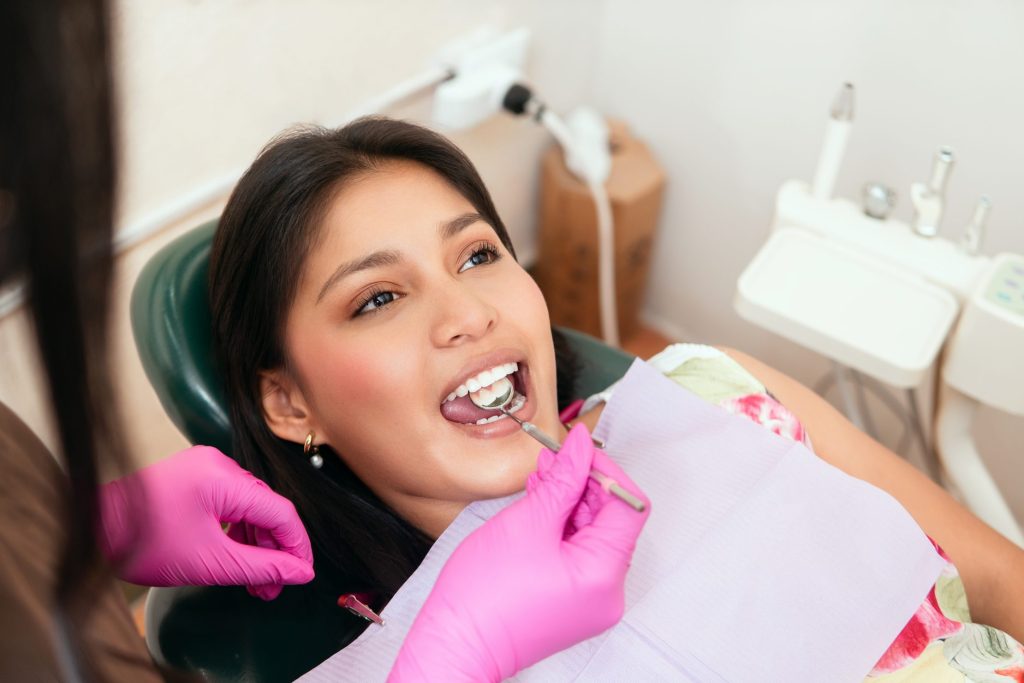
After your cleaning, Dr. McKibben or Dr. Ehrbar performs a careful visual check of the mouth tissues. We look at key areas of your head and neck region that can provide important clues, and we may check lymph nodes when applicable. We also talk with you about any symptoms you’ve noticed at home, since your experience matters just as much as what we see clinically.
If something looks unusual, we will walk you through what we found and discuss recommended next steps. In some cases, that means keeping a close eye on the area. In other situations, it means getting a second opinion so you can move toward answers with confidence.
When should you call for an oral cancer exam?
Trust your instincts. If something feels off, you deserve a conversation and an evaluation. We recommend calling to schedule an appointment if you notice early signs of oral cancer such as a sore, lump, or patch that lasts longer than two weeks, or if symptoms continue to return.
This is especially important if you have multiple risk factors like tobacco use and alcohol use, a history of HPV, frequent lip sun exposure, or any change that involves swallowing, speaking, or persistent discomfort near the throat. If you are feeling anxious, we will take things step by step and keep the conversation calm and clear.
Simple at-home habits that support oral cancer prevention
No routine can prevent every disease, but daily habits still make a difference. Think of these as steady, realistic steps you can take to support healthy tissues inside of your mouth and reduce avoidable risks connected to oral cavity cancer.
Helpful prevention habits include:
- Keep up with regular checkups and regular dental visits
- If you use tobacco, ask your healthcare team for support with quitting
- Limit alcohol, especially patterns tied to heavy alcohol consumption
- Protect your lips with SPF to reduce risk tied to sun exposure
- Pay attention to chronic dry mouth
- Stay aware of any spots that seem to be changing over time
If you ever feel unsure whether a spot is “worth mentioning,” bring it up. We would rather take a quick look than have you worry at home.
Schedule your oral cancer screening in Reynoldsburg, OH
If you have noticed early signs of oral cancer, or if it has been a while since your last visit, our team at McKibben Dental is here to help you feel comfortable, informed, and supported. We include an oral cancer screening during each standard appointment, and we will take time to answer questions in a clear, judgment-free way.
Schedule your next visit today. We’re proud to care for Reynoldsburg families and our neighbors across the Columbus area with preventive dentistry built on trust and long-term relationships.